Permanent exterior lighting used to be a particular niche upgrade, mainly scheduled for big personalized homes or business residential properties that wanted a polished appearance year-round. That has actually changed. Today, more home owners are evaluating Permanent Holiday Lights as both a convenience feature and a layout decision, similar to landscape lighting, safety and security cameras, or smart watering. The charm is evident once you have actually invested a couple of wintertimes climbing up a cool ladder, untangling strings of lights, replacing half-burned sections, and attempting to make the roofline appearance also from the street.
What makes permanent systems different is not simply that they remain in place. A properly designed configuration enters into the house. Throughout December, it can create a complete vacation display screen. In July, it can cast a refined accent clean for outside suppers. In October, it can change to autumn tones. On normal evenings, it can remain almost unnoticeable. That last point issues more than many people expect. Homeowners are usually thinking about the feature, yet they acquire based upon appearance. If the product looks bulky in daylight or promotes itself when shut off, interest tends to drop quickly.
This guide is for house owners that intend to understand exactly how these systems work, what a correct Permanent LED Illumination Installment includes, and exactly how to evaluate whether the investment makes good sense for their home.
What permanent holiday lights actually are
At a fundamental degree, irreversible vacation lights are inconspicuous LED lights systems placed along the roofline, fascia, soffits, or trim of a house. They are made to continue to be installed year-round and to be controlled via an application, timer, wall switch, or home automation system. Most contemporary systems make use of addressable LEDs, which suggests specific lights or small teams can transform shade independently. That unlocks to chasing effects, fixed scenes, arranged programs, and seasonal presets.
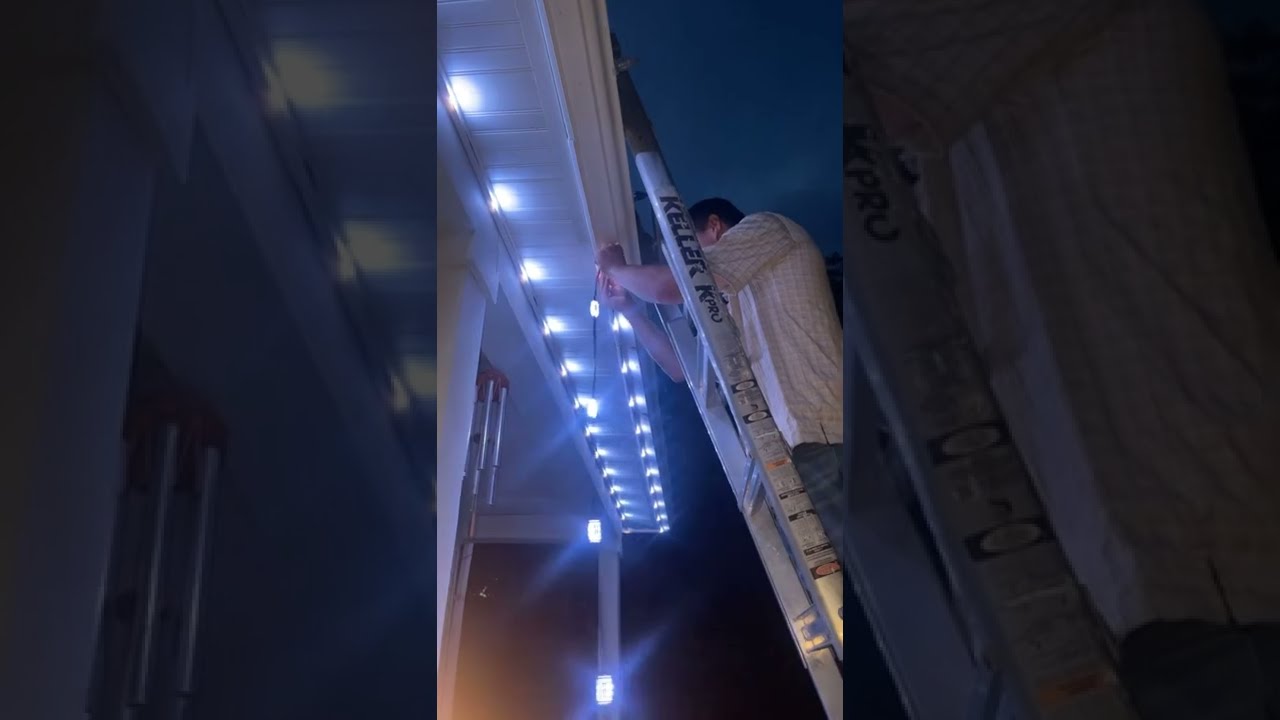
The important difference is that not all irreversible lights products are indicated for the same use. Some are developed mainly for joyful shade and animation. Others favor building accent lights. The best residential systems typically connect both categories. They can generate dynamic vacation scenes when wanted, however they also offer restrained daily setups that do not make the home look like a theme park.
In method, house owners often tend to make use of these systems in three means. The very first is obvious, vacation décor without the annual configuration and takedown cycle. The second is curb appeal, particularly for homes with solid rooflines, gables, or access details that benefit from refined night illumination. The third is sensible way of living use, such as lighting an outdoor patio edge, noting a driveway-facing altitude, or developing an inviting appearance when guests get here after dark.
Why home owners are making the switch
The toughest reason is comfort, however benefit alone does not describe the growth in demand. People are also reacting to a couple of reoccuring frustrations.
Traditional string lights are temporary by design. Clips break. Wind pulls lines loose. Areas stop working at the most awful time. Roof covering access gets riskier every year, especially for property owners with high pitches, second-story eaves, or glossy composite surface areas. There is additionally the storage problem. A large home can conveniently create a number of containers of seasonal illumination, extension cables, clips, and substitute bulbs. Also when the easy work, the process is repetitive and lengthy.
A long-term system alters the entire formula. As soon as the hardware is installed and set, the labor shifts from physical arrangement to a couple of faucets on a phone. Property owners can schedule shades for major vacations, sporting activities occasions, birthdays, neighborhood gatherings, or silent daily use. If a child desires purple and gold for college graduation weekend or a family members wants red, white, and blue for a summertime event, it takes minutes rather than a complete afternoon.
There is additionally a safety and security disagreement that must not be rejected. Every professional who works around homes has actually seen makeshift ladder setups that invite an autumn. Getting rid of the annual rooftop regimen is worth actual cash to lots of family members, especially older property owners or any individual that has currently had a close phone call hanging lights in negative weather.
The style concern that matters most: just how it looks in daylight
The most common blunder people make is shopping by application attributes before they assess exactly how the hardware vanishes into the home. Fancy shade scenes are very easy to sell. Clean daytime appearance is tougher to accomplish, and it is where product top quality and installer skill come to be obvious.
A long-term lighting system must look intentional, not added. That generally implies the light network or mounting track is color-matched to the soffit or fascia, the wire runs are hidden, and the spacing adheres to the design of the home rather than a one-size-fits-all pattern. On a white or cream house, minor inequalities might be hardly recognizable. On dark bronze, black, charcoal, or tarnished wood exteriors, bad matching stands apart immediately.
I have actually seen 2 setups on comparable homes produce totally different impacts. One disappeared so well that next-door neighbors just noticed it the first time it was activated. The other attracted focus everyday since the track sat happy with the trim, the cable changes were revealed, and the installers did not account for a complicated gable junction. In the evening, both homes shone. In daylight, just one resembled a premium upgrade.
This is where skilled judgment matters. A great installer is not just connecting lights. They are reading sightlines from the street, accounting for trim deepness, planning corners, and selecting installing areas that preserve the architecture.
Understanding the light quality
People commonly focus on color-changing ability, however the top quality of white light is equally as vital. For numerous homes, the most elegant daily setup is not saturated color whatsoever. It is a soft white radiance that highlights the roofline without looking harsh. That is why many house owners ask particularly for Traditional Warm Soft Lights. They want something inviting and calm, closer to candlelight or traditional incandescent vacation light bulbs than the chilly blue-white tones common in older LED products.
Color temperature level and illumination control shape the feeling of the house more than many customers realize. A very great white can make stone, stucco, and painted trim feel sterile. A warmer white has a tendency to flatter block, timber, and designed exteriors. Dimmer capability likewise matters. Complete result may be best for a holiday occasion, however also aggressive for a typical weekday evening. The best system allows you decrease intensity and produce scenes that really feel refined rather than loud.
Even with RGB or RGBW systems, cozy whites differ by producer. Some products mimic warm white with shade blending, which can be appropriate at a range however might not look as natural up close. Others include a committed white diode that generally provides a cleaner building outcome. If refined daily usage is important to you, ask to see the system face to face in the evening, not simply in advertising and marketing photos.
What an appropriate Permanent LED Lights Setup includes
A top quality setup begins long before the initial hole is drilled. The contractor ought to assess the roofline, power schedule, trim materials, dampness exposure, and control place. They need to also ask how you prepare to make use of the lights. A family members that desires a low-key warm-white accent most of the year might need a different format and programs technique than a home owner that wants computer animated holiday scenes visible from the end of the block.
The setup itself typically includes a placing channel or track, low-voltage or line-voltage power parts depending upon the product, control hardware, and the LED nodes or components. Some systems put under the soffit and cast light exterior or down in a clean impact. Others sit near the fascia side for an extra defined point-of-light look. Neither is naturally better. It depends upon the home design and the visual impact you want.
What divides professional job from rushed job is attention to the unglamorous information. Power products need correct placement and weather security. Infiltrations need securing. Cord runs need strain relief and tidy routing. Long terms require voltage planning so brightness stays constant from one end to the various other. Corners require to be taken care of neatly, especially on multi-level homes where changes show up from the street.
If a service provider can not clearly explain exactly how they take care of these fundamentals, that is an indication. Fancy app demos do not compensate for https://www.mrmhomeservices.com/our-services/classic-warm-soft-lights/santa-venetia/ inadequate electrical preparation or sloppy surface work.
Homes that benefit the most
Not every residence acquires the very same aesthetic payoff. Homes with strong architectural lines often tend to profit the most, especially those with clear eaves, front-facing gables, garage tops, dormers, and covered entranceways. A moderate home can look striking with a carefully lit roofline. A big home with difficult altitudes can likewise benefit, yet only if the format is discerning. A lot more lights do not constantly mean a much better result.
Some homeowners think every side has to be lit. In technique, restraint frequently looks far better. Lighting just the front-facing building aspects can create a cleaner, extra balanced look than wrapping every side and back side. That method can also reduce price significantly.
Homes with mature landscaping present one more intriguing instance. If trees already mount the house and landscape lighting is doing a few of the work at ground degree, the irreversible roofline lights need to enhance that effect rather than overpower it. The nicest tasks normally really feel split. The house shines gently above while path lights, uplights, or patio components take care of the reduced aesthetic field.
Cost, worth, and what drives the price
Permanent lighting systems are not impulse purchases. Installed pricing differs extensively based on product kind, home size, roofing system intricacy, color ability, and labor gain access to. An uncomplicated single-story setup will set you back far much less than a two-story home with steep pitches, multiple heights, and futures. In broad terms, homeowners commonly come across pricing that ranges from several thousand dollars for smaller homes to well past that for big personalized residences.
The primary price drivers are not mystical. The video footage of the roofline issues. So does the number of corners, heights, levels, and power areas. Item quality matters, specifically in the track, LEDs, control system, and climate resistance. Labor can swing dramatically based on access challenges. A clean cattle ranch home with easy ladder positioning is something. A high house over irregular grade with delicate landscape design is another.
Whether the system includes resale worth is more difficult to measure straight, however curb allure and comfort do influence buyer perception. Also when a vendor does not recover the full installation expense in a formal evaluation feeling, a well-executed system can help a home feel more existing and much better taken care of. That can matter in an affordable market.
For house owners determining whether the investment is warranted, the far better contrast is usually not versus one period of short-lived lights, but versus years of repeat investing, storage hassle, ladder danger, and inconsistent outcomes. If you currently spend for annual vacation light installation, the math becomes easier to justify.
The functions worth paying for
Not every promoted feature deserves equivalent focus. Some are useful weekly. Others are mostly showroom material.
Here are the attributes I would certainly focus on when examining systems:
Reliable app control with organizing that in fact works Clean track style that blends with the home in daylight Quality warm-white performance, particularly if you desire Timeless Warm Soft Lights Solid warranty assistance on both item and installation labor The capacity to isolate zones or create straightforward customized scenes without frustrationAn unusual number of house owners care a lot more regarding the second and third products than the computer animated results. That comes to be clear after the vacations. When January passes, the system either works out into your home gracefully or it starts to feel like a pricey novelty.
Common blunders customers make
The initially blunder is selecting simply by cost. Lower-cost systems can be eye-catching theoretically, yet if the track discolors, the application is unpredictable, or the installment looks evident in daytime, the savings discolor rapidly. Outside items stay in warm, cool, wind, wetness, and ultraviolet direct exposure. Those problems penalize affordable materials.
The second mistake is acquiring too much brightness. People see a significant nighttime demo and assume even more outcome suggests a lot more value. On a real area road, extreme brightness can look commercial or perhaps aggravate close-by homes. Good lights ought to fit the range of the house and the context of the block.
The 3rd error is underestimating service access. One way or another, a controller might require updating, a power supply might require replacement, or a section may require medical diagnosis. A thoughtful setup leaves practical accessibility factors and records the layout. A negligent one buries every little thing behind finished surfaces and creates headaches later.
The fourth mistake is disregarding how the system will certainly be utilized from February with October. If your only goal is December illumination and you are not thinking about building or seasonal use the remainder of the year, you should be honest about that. Permanent Holiday Lights still might be rewarding, yet the worth formula changes.
Color scenes versus ageless appeal
One of the biggest design choices is whether you want a system that leans lively or one that leans building. There is no wrong solution, but the option affects item selection and setup design.

Animated color scenes are terrific for holidays, events, and household occasions. Kids love them. Next-door neighbors see them. They can make the home feel dynamic and celebratory. The trade-off is that some scenes age promptly, and not every home owner desires that degree of visual energy outside the vacation season.
Architectural scenes are quieter. Warm whites, amber tones, and subtle laundries tend to make a home feeling finished and upscale. If your house has high quality products such as natural stone, cedar accents, brickwork, or in-depth trim, controlled lights generally does even more justice to those materials than constant movement and saturated color.
The most effective systems give you both, then make it very easy to utilize restraint. That balance is one factor dedicated long-term systems have come to be extra attractive than momentary hairs or improvisated wise bulb setups.
Questions to ask before employing an installer
A brief discussion with the installer can disclose a whole lot. You do not need to seem technical. You just require to ask functional questions and pay attention for clear answers.
Use these concerns as a filter:
How will the track and cord runs be hidden on my specific roofline What does the system look like during the day when it is off How are power supplies and controllers safeguarded from weather What components of the guarantee are handled by you versus the manufacturer Can I see a local setup during the night and, ideally, in daylightExperienced installers typically respond to readily and will certainly explain compromises you had actually not considered. If the conversation remains vague or turns promptly into a sales pitch concerning shade effects, maintain looking.
Maintenance and long-lasting ownership
One factor house owners like these systems is that upkeep is normally light, but light upkeep is not the like no upkeep. Outside illumination still gains from regular inspection. Leaves can accumulate around elements. Severe weather condition can worry connections. Software application updates might be needed for the controller or application. If you reside in an area with extreme sunlight, freeze-thaw cycles, or salt exposure near the coastline, worldly top quality ends up being specifically important.
The excellent news is that well-installed systems generally do not demand much from the property owner. An annual visual check, occasional cleansing near available areas, and prompt focus if an area acts oddly are commonly sufficient. If the installer provides a solution plan, it can be rewarding, especially for larger homes.
It is additionally smart to conserve setup documents. Maintain pictures of controller places, power supply access, and any kind of concealed joint points. That info is beneficial years later on, specifically if you repaint exterior trim, change soffits, or work with various other contractors for roof and fascia work.
How long-term lighting fits a modern-day home
Modern house owners anticipate modern technology to get rid of rubbing from daily life. That does not imply every smart feature is rewarding. Some end up being tricks. Long-term exterior lights has a tendency to stick since it resolves an actual problem while also enhancing the appearance of the home.
There is a psychological side to it as well. Outside lighting changes how a home feels when you pull into the driveway after dark. It forms first impressions for guests. It can make a normal weeknight really feel a bit more willful. During the holidays, it recovers something several households have actually shed, the capacity to decorate magnificently without transforming it into a weekend-long project.
The greatest tasks are not the ones with one of the most dramatic app screenshots. They are the ones where the lighting really feels incorporated into your house, where the installer respected the architecture, and where the property owner can move from cheery shade to Classic Cozy Soft Lights without the system ever watching out of place.
If you are considering a Permanent LED Illumination Setup, take your time with the layout and with the installer choice. Consider real homes, not simply item reels. Stand across the street in daytime. Ask how the system will certainly age. Think of how you desire your house to really feel the majority of nights of the year, not just on significant holidays. That is the attitude that normally causes a result you will certainly appreciate for a long time.